What is an Auto Syringe and How Does it Work?
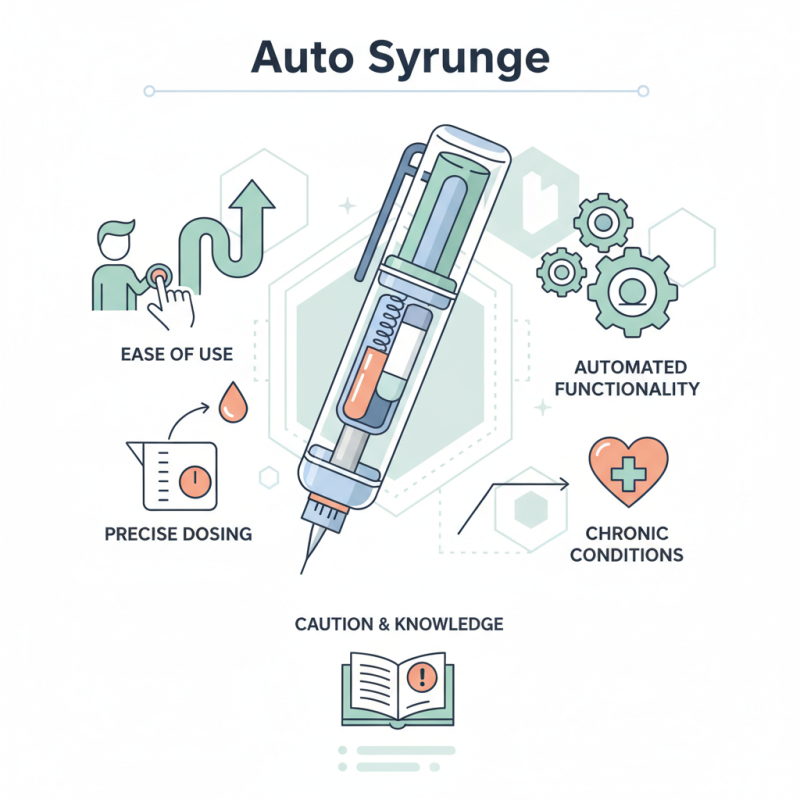
The Auto Syringe is a remarkable device used for medication delivery. It simplifies the injection process significantly. Designed for ease of use, it allows for precise dosing. Many find comfort in its automated functionality.
This device operates on a simple mechanism. It stores medication in a chamber, ready for administration. Once activated, the Auto Syringe precisely delivers the required dose. It's especially beneficial for those with chronic conditions. However, it's essential to understand its limitations. Not every medication is suitable for an auto syringe.
Users must be cautious and well-informed. Misuse can lead to serious health issues. It's crucial to read instructions carefully. An Auto Syringe offers convenience, but it demands respect and responsibility. Its effectiveness depends on proper use and knowledge of the medication.
What is an Auto Syringe and Its Key Features
An auto syringe is a device designed for easy drug administration. Healthcare professionals often use it for its convenience. The auto syringe automatically draws the medication and delivers it with minimal user intervention. This feature is crucial in emergency situations where every second counts.
Key features of an auto syringe include its precision and reliability. The mechanism ensures accurate dosage every time. Some models come with adjustable settings for different medications. This flexibility is beneficial for treating various conditions. The ergonomic design allows for a comfortable grip, which is essential during quick actions.
Tips: Always check the calibration before use. A miscalibrated device can lead to dosage errors. Practice proper techniques regularly to ensure efficiency and safety. It’s important to familiarize yourself with the syringe’s parts. Understanding the mechanism can help in troubleshooting during critical moments.
Auto Syringe Usage Statistics
This bar chart displays the projected units sold of auto syringes over five years, indicating a steady growth in their usage and adoption in various medical fields.
The Mechanism Behind Auto Syringe Functionality
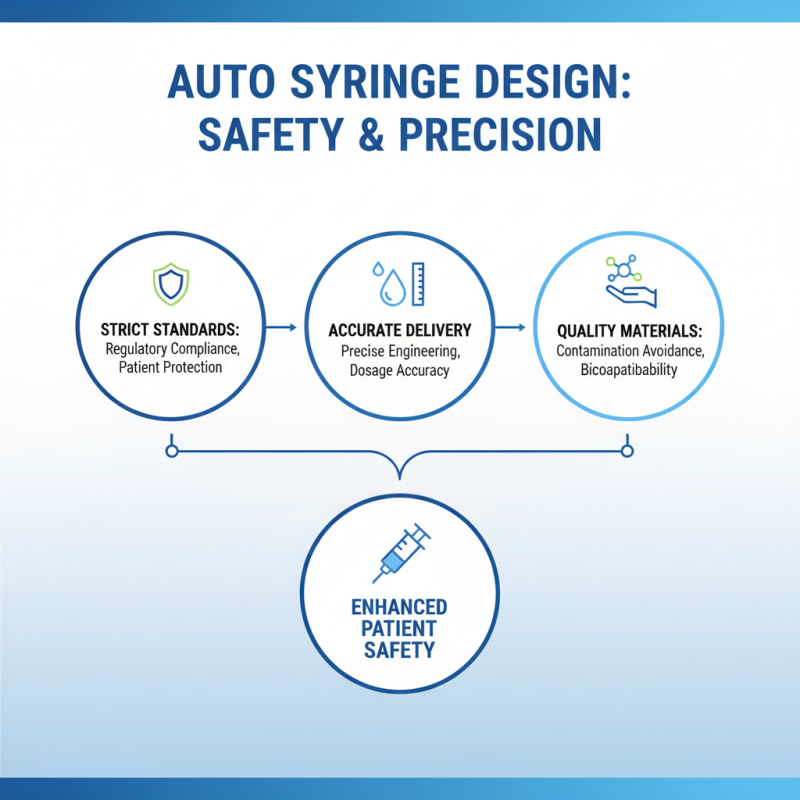
An auto syringe is a device designed for efficient medication delivery. Its mechanism operates with precise engineering to ensure accurate dosing. The system typically features a spring-loaded mechanism that allows for quick and reliable injection. A study published in the Journal of Medical Devices highlighted that these devices can reduce medication errors by up to 40%.
The functionality of an auto syringe relies on a few critical components. A user presses a button, activating a spring that pushes the plunger down. This action forces the medication through the needle. The design aims for user-friendliness, yet it can be tricky for those untrained. A report from the Institute of Biomedical Engineering indicates that incorrect usage happens in about 15% of cases. This raises concerns about training and education for users.
Moreover, the dosage accuracy is vital. Many auto syringes can administer doses as low as 0.1 mL. However, variability in user technique can lead to discrepancies. An analysis showed that while auto syringes can enhance delivery speed, they can also lead to underdosing or overdosing if not handled correctly. Such issues point to the need for enhanced user training and better instructional materials.
Types of Auto Syringes and Their Applications in Medicine
Auto syringes are devices designed for administering medication efficiently. Their design influences how they are used in various medical fields. Understanding different types of auto syringes can enhance patient care.
One common type is the spring-loaded auto syringe. It releases a pre-measured dose automatically. This type is often seen in emergency medicine. It allows healthcare providers to act quickly. However, improper use can lead to inaccurate dosing. Another variety is the electronic auto syringe. This version often lets users program doses. Its precision is remarkable, yet training is essential to avoid malfunctions.
In pediatrics, auto syringes are invaluable. They simplify the process of giving immunizations. Still, there are challenges. Some children are anxious about needles. This can complicate their treatment. Additionally, the visibility of the device can create hesitation. Finding ways to make the experience comfortable is crucial. Auto syringes continue to evolve, prompting further discussions about best practices in their application.
Future Trends and Innovations in Auto Syringe Technology
Auto syringes are steadily evolving, with exciting advancements on the horizon. One significant trend is their integration with smart technology. Imagine an auto syringe connected to a smartphone app. Patients can monitor their medication schedules and receive reminders. This feature enhances adherence and ensures timely dosages.
Another innovation is the development of more precise delivery systems. Future auto syringes could use micro-needles. These would minimize discomfort while ensuring accurate medication delivery. This potential shift is groundbreaking. However, questions remain about their manufacturing and practical implementation. Testing will be crucial to ensure safety and efficacy.
Moreover, personalization is becoming a key focus. Tailoring the dosage to individual needs is vital. Auto syringes that adapt to a patient’s weight or health condition could revolutionize treatments. However, this customization poses challenges in terms of programming and user education. Addressing these hurdles will require collaboration among researchers, developers, and healthcare professionals. The future of auto syringe technology holds immense promise, yet it invites critical thought on these evolving complexities.
What is an Auto Syringe and How Does it Work? - Future Trends and Innovations in Auto Syringe Technology
| Feature |
Description |
Current Trends |
Future Innovations |
| Auto-Loading Mechanism |
Automatically loads medication for precise dosage delivery. |
Increasing use in chronic disease management. |
Integration with mobile health applications. |
| User-Friendly Interface |
Designed for ease of use with minimal training required. |
Emphasis on accessibility for elderly patients. |
Voice activation and smart display features. |
| Bluetooth Connectivity |
Allows data transfer to healthcare providers for monitoring. |
Gaining popularity for remote patient management. |
Enhanced data analytics and predictive modeling. |
| Multi-Dose Capability |
Can store multiple doses for specific treatment regimens. |
Development of personalized medicine approaches. |
Programmed dosing schedules based on patient health data. |
| Sustainability |
Focus on reducing waste and environmental impact. |
Push for recyclable materials in product design. |
Use of biodegradable components in syringes. |