Top 10 Benefits of Using Cattle Ear Tags for Livestock Management?
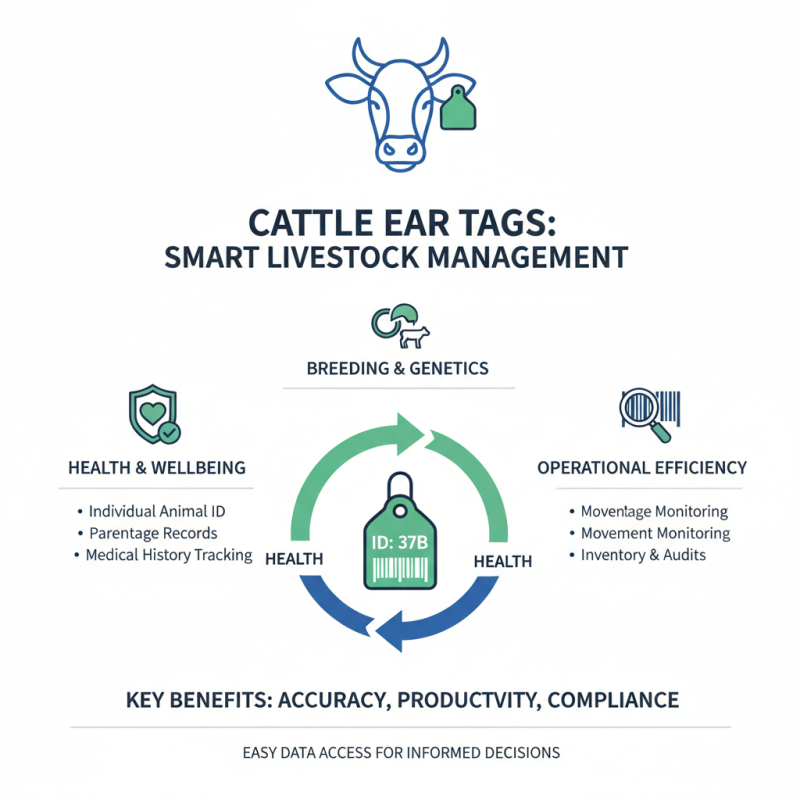
Managing livestock efficiently is crucial for farmers and ranchers. One essential tool in this process is the Cattle Ear Tag. These tags serve multiple purposes and offer numerous advantages in tracking and maintaining herd health. They provide a simple solution to identify individual animals, which enhances management practices significantly.
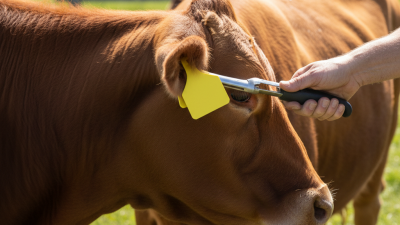
Cattle Ear Tags are more than just identification. They help in recording vital information, like vaccinations and breeding history, right at the farm level. This allows farmers to make informed decisions quickly. Visual identification using tags also minimizes stress during routine checks. However, some may overlook the importance of proper application and maintenance of these tags.
A common misconception is that any tag will suffice. In reality, material quality and design matter greatly. Poor choices can lead to tag loss or damage, necessitating constant replacements. This reflects the need for ongoing evaluation of livestock management practices. Utilizing Cattle Ear Tags effectively can lead to better livestock health and productivity.

Advantages of Enhanced Identification and Record-Keeping
Effective livestock management relies on clear identification. Cattle ear tags serve this purpose well. These tags allow farmers to track each animal’s health, breeding records, and movements. Easy-to-read numbers or barcodes make audits simple. A quick glance can reveal essential information. This aids in maintaining accurate health records. Missing or incorrect data can lead to problems. Keeping accurate records is vital for productivity.
Moreover, ear tags help in managing large herds. Identifying animals without tags can be daunting. Tags reduce the time spent looking for specific cattle. They streamline routine tasks, such as vaccinations and feed adjustments. However, sometimes these tags can wear out or become damaged during use. Regular checks are necessary to ensure they remain legible.
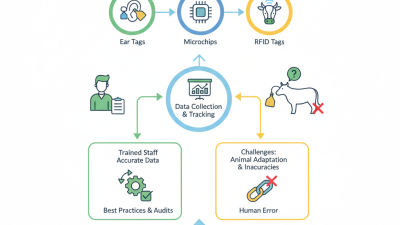
Enhanced identification fosters better decision-making. Knowing the lineage of each animal can guide breeding strategies. It also supports compliance with health regulations. However, the reliance on technology can create challenges. Not every system is perfect, and human error can occur. This necessitates a backup verification method to cross-check records. Accurate identification is a cornerstone of effective livestock management.
Streamlining Health Monitoring and Disease Management
Cattle ear tags are essential tools for modern livestock management. They simplify health monitoring and disease management. Each tag carries unique identification details. This makes tracking an animal's health history straightforward. Farmers can easily distinguish animals based on their health records. A quick glance at a tag provides crucial information at a moment’s notice.
Monitoring outbreaks becomes more efficient with ear tags. They enable precise recording of vaccination schedules. This helps in avoiding gaps that could lead to disease spread. However, tags can become damaged or lost over time. Regular checks on tag integrity are necessary. If a tag comes off, it complicates disease tracking and monitoring. Moreover, relying solely on tags might lead to overconfidence in health systems.
Integration of technology can enhance the effectiveness of ear tags. Digital records complement physical tags. They provide real-time data updates, offering a comprehensive view of herd health. Yet, adopting this technology requires training. Farmers must ensure they understand how to utilize the systems fully. A lack of knowledge can limit efficacy. The results depend heavily on how farmers engage with these tools.
Top 10 Benefits of Using Cattle Ear Tags for Livestock Management
Facilitating Genetic Tracking and Breeding Programs
Using cattle ear tags plays a crucial role in genetic tracking and breeding programs. These tags serve as unique identifiers for individual animals. According to a report by the USDA, effective identification can lead to a 15% improvement in breeding outcomes. Accurate tracking allows farmers to monitor lineage. This data is vital for making informed breeding decisions.
Genetic tracking also enables farmers to reduce inbreeding. By knowing an animal's ancestry, producers can strategically select breeding pairs. Ideally, this reduces genetic disorders. However, some producers still neglect thorough record-keeping. In one survey, over 40% of ranchers admitted to inadequate tracking practices. This oversight can lead to lost genetic potential.
In addition, breeding programs benefit from detailed data collection. Many farmers now use digital platforms to analyze genetic traits. A comprehensive genetic database increases efficiency and productivity. Yet, the reliance on technology presents challenges as well. Technical issues can disrupt operations. Ensuring data accuracy remains a concern. Striving for precision is key in maximizing the benefits of genetic tracking.
Improving Labor Efficiency and Time Management in Farms
Managing livestock manually can be a daunting task. It often leads to wasted time and increased labor costs. Cattle ear tags can streamline farm operations significantly. They allow for quick identification, making it easier to track each animal. This reduces the time spent on sorting and inventory tasks.
Incorporating ear tags enhances overall efficiency. Farmers can quickly locate animals during feeding or medical checks. This method also simplifies record-keeping. However, it requires proper training for handlers. Misplaced tags can lead to confusion and mistakes. Regular checks and updates on tagging might seem tedious, yet they are crucial. Without attention to detail, the benefits diminish.
Moreover, using ear tags fosters better communication amongst farm staff. Everyone knows which animal is which, minimizing misunderstandings. Clear identification helps ensure that animals receive proper care. Still, relying solely on tags isn’t foolproof. Farmers should have a backup plan. They must prepare for potential tag damage or loss. Embracing technology along with ear tags can bridge these gaps. Creating a flexible system will improve farm management.
Cost-Effectiveness of Long-Term Cattle Management Solutions
Cattle ear tags can significantly enhance the cost-effectiveness of long-term livestock management. These tags are simple yet critical tools for identifying and tracking animals. A well-implemented tagging system reduces expenses associated with lost livestock. It helps prevent unnecessary replacements or losses that can strain a farm's budget.
Using ear tags also streamlines health management. Farmers can quickly access a cow’s medical history. This reduces time spent on treatments and ensures timely vaccinations. Accurate records are easier to maintain with proper tagging. However, many struggle to keep the tags readable over time, leading to confusion.
Data from ear tags can inform breeding decisions. This insight can promote more efficient herd development. Yet, issues may arise if tags fail or fall off. Regular inspections are necessary, but not all farms prioritize this practice. Such oversights can affect overall farm productivity. Balancing tag management with daily operations can be challenging, but the potential savings make it worthwhile.
Top 10 Benefits of Using Cattle Ear Tags for Livestock Management - Cost-Effectiveness of Long-Term Cattle Management Solutions
| Benefit |
Description |
Cost Savings (%) |
Data Accuracy Improvement (%) |
Time Efficiency Improvement (%) |
| Enhanced Record Keeping |
Tracks individual animal health, breeding, and production data. |
15% |
90% |
20% |
| Disease Management |
Quick identification of sick animals helps to limit outbreaks. |
25% |
85% |
30% |
| Improved Traceability |
Facilitates tracking from farm to consumer. |
10% |
92% |
15% |
| Breeding Management |
Helps identify breeding patterns and improve genetics. |
20% |
80% |
25% |
| Operational Efficiency |
Reduces labor needs through streamlined identification. |
18% |
70% |
35% |
| Inventory Management |
Easily tracks the number and ownership of livestock. |
15% |
88% |
20% |
| Regulatory Compliance |
Ensures adherence to livestock regulations and standards. |
12% |
95% |
10% |
| Cost-Effective |
Affordable solution for ranchers looking to improve management. |
20% |
75% |
15% |
| Easy Implementation |
Quick setup and integration into existing systems. |
8% |
90% |
20% |
| Data Analysis |
Provides data for better decision-making and analysis. |
15% |
85% |
25% |