10 Best Livestock Medical Syringes for Global Buyers?
Choosing the right Livestock Medical Syringe is not a simple purchasing exercise. It affects animal welfare, dosage accuracy, worker safety, and treatment consistency. A syringe may look reliable on a supplier’s page, yet its plunger can stick in cold weather. Small details matter.
Dr. Temple Grandin, a leading animal-handling scientist, has said, “The most important thing in handling cattle is to eliminate distractions.” Her principle also applies to injection equipment. Clear graduations, smooth movement, secure needle connections, and easy cleaning can reduce stress during treatment. The best models should support calm, controlled handling in barns, pasture settings, and veterinary facilities.
This guide examines ten Livestock Medical Syringe options for global buyers. It considers reusable and disposable designs, dose capacity, construction materials, grip comfort, seal performance, and maintenance needs. It also reviews supplier transparency, packaging quality, and technical support. These factors can vary widely between regions.
Price alone is not enough.
A cheaper syringe may require frequent replacement or create dosing uncertainty. A premium model may be unsuitable for small farms if replacement parts are difficult to obtain. That limitation deserves attention. Buyers should match each syringe with the animal species, medication volume, needle size, staff experience, and local veterinary guidance. Product claims also need verification through manufacturer documentation and practical testing.
No single model fits every operation. The strongest choice is the one that performs consistently, supports humane handling, and remains dependable after repeated use.
What Are Livestock Medical Syringes and How Are They Used?
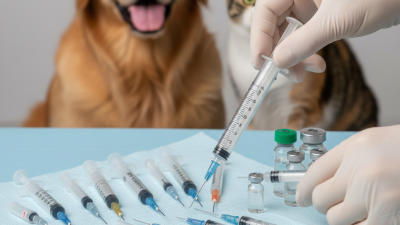
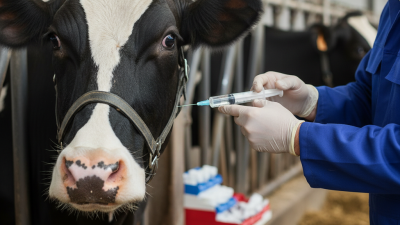
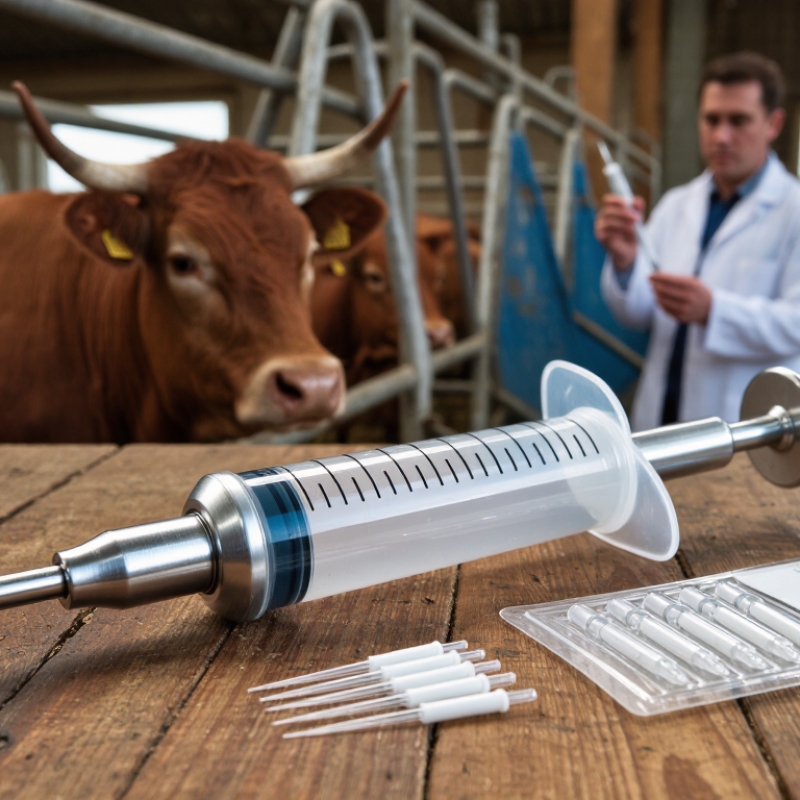
Livestock medical syringes are devices used to deliver veterinary medicines, vaccines, or measured fluids to animals. They may support subcutaneous, intramuscular, or intravenous treatment, depending on the medicine and veterinary instructions. Common types include disposable syringes, reusable syringes, and multi-dose models. Automatic injectors can help workers treat several animals efficiently. Accuracy still matters more than speed.
A suitable syringe should match the animal’s size, treatment volume, needle gauge, and injection route. A small calf may require a different setup than an adult cow or sheep. Check the barrel markings under good light, and confirm that the plunger moves smoothly. Needles must be sterile, sharp, and replaced when bent, contaminated, or damaged. Never share equipment between animals without proper cleaning and sterilization.
Clean hands and organized supplies reduce handling errors. Keep medicines according to their instructions, including temperature and light requirements. Record the animal, product, dose, time, and injection site. This simple note can prevent repeated treatment. In practice, choosing a syringe is not always straightforward. Packaging may look professional, yet calibration can still be unclear. Buyers should request technical specifications, material information, and quality documentation from qualified suppliers. A local veterinarian should confirm the equipment before field use, especially for young, sick, or stressed animals. Mistakes happen. Reviewing the process helps prevent the next one.
How to Compare the 10 Best Syringes for Different Farm Animals
Comparing the 10 Best Syringes for Different Farm Animals
Choosing a livestock syringe requires more than checking its price or advertised capacity. In cattle, a sturdy 20–50 ml syringe can suit larger treatment volumes, while sheep and goats often need smaller barrels for better dose control. Pigs may require a secure grip and a clear scale because sudden movement can cause spills. For poultry, compact syringes with fine, suitable needles allow careful handling of small bodies. Always match needle size and injection method with veterinary instructions.
Accuracy matters most.
During routine farm checks, I look for a smooth plunger, readable markings, and a barrel that does not cloud quickly. A locking hub can reduce needle movement during handling. For repeated dosing, a comfortable grip may prevent hand fatigue, especially in cold weather. Reusable models need thorough cleaning, drying, and inspection after each use. Disposable models can simplify hygiene, but their waste should be managed responsibly under local rules.
Small details matter.
A syringe that works well for cattle may feel awkward around lambs or piglets. I once underestimated how much a slippery barrel could affect control; that mistake made a careful comparison feel necessary. Buyers should also check calibration, material quality, storage conditions, and compatibility with approved veterinary medicines. Product instructions and professional veterinary guidance should remain part of every purchasing decision.
What Features Determine Syringe Safety, Accuracy, and Durability?
10 Best Livestock Medical Syringes for Global Buyers
A safe livestock syringe should feel stable in a gloved hand. Its barrel must remain clear, with strong markings that resist rubbing and disinfectant. Accuracy depends on a smooth plunger, consistent calibration, and a seal that prevents leakage. Small errors matter when treating young animals or delivering concentrated veterinary medicines. A secure needle connection also reduces accidental separation during movement. Luer-lock and other validated fittings can improve control, but compatibility must be checked carefully.
Durability comes from practical details. Impact-resistant materials, chemical tolerance, and a flexible yet firm gasket help syringes survive busy farm conditions. Reusable models need reliable cleaning and sterilization instructions. Disposable models should have sealed packaging and clear lot information. Buyers should also review testing records, storage conditions, and the supplier’s quality controls. No syringe is perfect. A highly durable barrel may still have a stiff plunger, which can reduce dosing control. That weakness deserves honest inspection.
Tips: Check the graduation lines under normal barn lighting. Move the plunger slowly before use. Look for cracks, cloudy plastic, damaged packaging, or uneven markings. Select the smallest practical barrel for better precision. Keep needles separate from clean supplies. Ask for performance data and applicable veterinary compliance documents. Field feedback is useful, but it is not a substitute for controlled testing. Manufacturer claims can sound convincing. Verify them.
How Can Global Buyers Select, Use, and Maintain Livestock Syringes?
How Can Global Buyers Select, Use, and Maintain Livestock Syringes?
Global buyers should match each syringe to the animal, medicine, and treatment volume. A veterinarian can confirm the correct capacity and needle size. For small doses, clear markings and smooth plungers improve accuracy. For larger herds, durable materials and comfortable grips reduce hand fatigue. A secure needle connection also matters during repeated treatments. Choose sterile, individually packed products when contamination risk is high. Check packaging, expiry dates, and local veterinary requirements before purchase. The lowest price can hide weak seals or unclear graduations. That is easy to overlook.
Before use, inspect the barrel, plunger, needle, and protective cap. Do not use damaged or cloudy equipment. Confirm the medicine label, dose, route, and animal identity. Keep the syringe steady and avoid touching sterile parts. Use a fresh needle when the procedure requires it. Reuse should occur only when the device is specifically designed for it and approved by local guidance. After treatment, clean reusable equipment according to the manufacturer’s instructions. Remove medicine residue, dry every part, and store syringes in a clean, dry container. Needles require safe disposal through approved veterinary waste systems. Keep simple treatment records. They support traceability and reveal repeated dosing errors. Even experienced handlers can miss a calibration mark in poor light. Better lighting and a second check may prevent that mistake.