How to Choose a Plastic Steel Injection Syringe in 2026?
Choosing a Plastic Steel Injection Syringe in 2026 requires more than comparing prices or attractive packaging. A reliable choice begins with the intended application, fluid compatibility, pressure requirements, and expected service life. The syringe should feel balanced in the hand, move smoothly, and maintain a clear, readable scale. Small details matter. A stiff plunger can disrupt dosing. A weak connection can create leakage. A cloudy barrel can hide air bubbles.
Dr. Elena Marquez, a medical-device quality specialist with experience in injection-system evaluation, states, “A dependable syringe is defined by controlled performance, not by appearance alone.” Her observation offers a useful starting point for buyers, engineers, and procurement teams. They should review material composition, sealing quality, dimensional consistency, and sterilization compatibility. Plastic steel construction may provide useful strength and chemical resistance, but performance still depends on manufacturing quality. Not every reinforced syringe performs equally.
This guide examines how to choose a Plastic Steel Injection Syringe for modern clinical, laboratory, and industrial requirements. It considers safety documentation, ergonomic design, connector standards, and traceability. It also explains how to compare suppliers without relying on vague marketing claims. The process is not perfectly simple. Product labels can be incomplete. Testing conditions may differ. A syringe that performs well in one setting may disappoint in another. Careful verification remains essential. Ask for technical data. Request samples. Check the details twice.
Define the Application and Select 1–50 mL Syringe Capacities
How to Choose a Plastic Steel Injection Syringe in 2026?
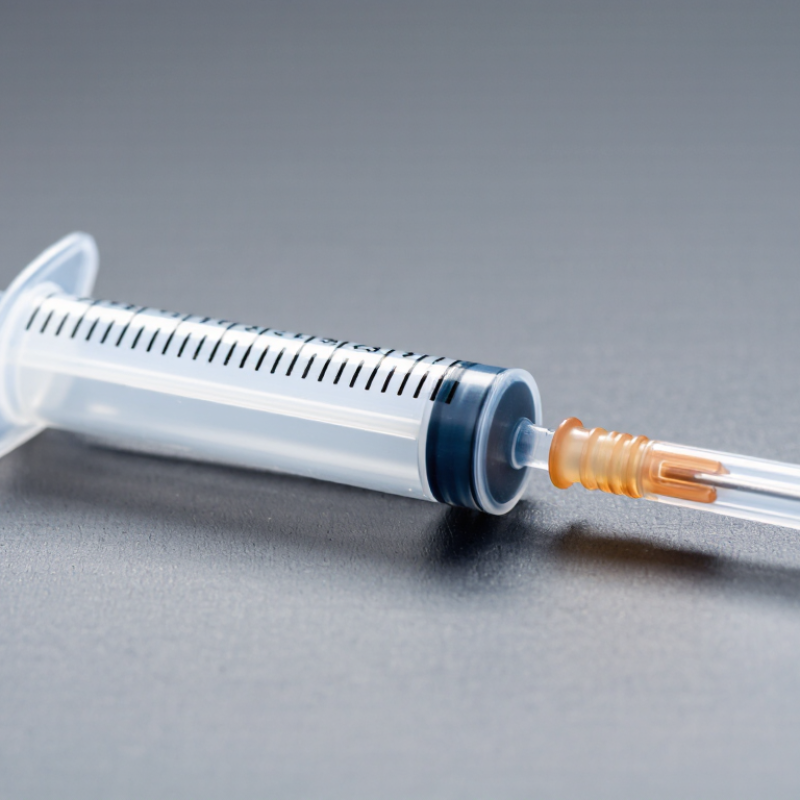
Choosing a plastic steel injection syringe begins with the application, not the catalog. WHO estimates that more than 16 billion injections are administered globally each year. That scale makes fit, accuracy, and handling important. A 1 mL syringe suits small-volume dosing, laboratory transfers, and applications requiring fine graduation marks. Its barrel gives better visual control, but the plunger can feel less forgiving.
For 3–5 mL tasks, such as routine fluid delivery or controlled sampling, balance capacity with hand stability. A 10 mL syringe works better when the operator needs extra volume without repeated refilling. The jump to 20 or 30 mL changes the experience: force rises, grip matters more, and graduation readability can decline. Plastic construction reduces breakage risk, while the steel component should resist bending and maintain a secure connection.
Use 50 mL capacity only when the application genuinely requires it. Larger barrels are useful for irrigation, transfer, and thick fluids, but they can encourage overfilling or inaccurate estimation. ISO 7886-1 provides performance requirements for sterile, single-use hypodermic syringes, including leakage and graduation accuracy. Still, standards do not replace practical testing. I would test the syringe with the actual fluid, temperature, and operator technique. That step is easy to skip. It should not be. A recent technical review of injection-device selection also emphasizes dead space, dose accuracy, and connection compatibility, details that capacity labels alone cannot reveal.
Compare Polypropylene Barrels with Stainless-Steel Needles
How to Choose a Plastic Steel Injection Syringe in 2026?
A polypropylene barrel offers low weight, good chemical resistance, and clear volume markings. It also tolerates common sterilization processes, although heat exposure can affect dimensional stability. WHO reports that healthcare workers administer about 16 billion injections worldwide each year, making material consistency a practical safety issue. The organization’s injection-safety guidance also emphasizes sterile, single-use equipment and reliable disposal practices.
The stainless-steel needle adds stiffness and predictable penetration. Its gauge, bevel geometry, and wall thickness matter more than appearance. ISO 9626 specifies requirements for stainless-steel needle tubing, while ISO 7886-1 addresses sterile, single-use syringes. A 1 mL syringe with a 25-gauge needle may suit precise dosing, but thicker fluids can require a larger internal diameter. Fit the needle to the task.
Check the barrel for readable graduations, smooth plunger travel, and minimal dead space. Inspect the hub connection carefully. A loose connection is unacceptable. Material compatibility testing should include extractables, leakage, particles, and storage stability. I would not select polypropylene only because it looks clear. Clarity can hide weak seals. One overlooked detail remains: some assemblies perform well during testing but become stiff after long storage. That deserves another review. Industry reports provide useful direction, not a substitute for lot-specific validation.
Verify ISO 7886-1 Requirements for Accuracy, Leakage, and Plunger Fit
Choosing a plastic-steel injection syringe in 2026 requires more than checking a clear barrel. ISO 7886-1:2017 covers sterile, single-use syringes for manual use. It addresses graduated capacity, delivered volume, leakage, and plunger movement. Ask for test records, not only a certificate. Gravimetric accuracy testing should show repeated measurements at the intended dose. Small errors become visible when the barrel holds 1 mL or less. A 0.05 mL reading can matter in practice.
Leakage testing should examine both the plunger seal and the nozzle connection. Inspect samples after pressure exposure, not just before use. The plunger should move smoothly, but excessive looseness may allow leakage or air entry. Excessive force can also disturb dosing. ISO 7886-1 does not replace requirements for the attached needle; verify the relevant needle standard separately. The World Health Organization reports that unsafe injections have historically caused millions of hepatitis infections worldwide, showing why reliable components matter. That figure comes from WHO injection-safety reports, not from syringe accuracy testing.
Tips:
Request the exact ISO edition, laboratory method, sample size, and acceptance results. Check barrels under strong light for graduation distortion. Test plunger fit after storage, because heat can change polymer behavior. Do not accept “medical grade” as proof of compliance. I have seen smooth-looking syringes perform inconsistently; appearance is a weak inspection tool. One practical gap remains: many buyers compare unit price before reviewing delivered-volume data. That choice deserves reconsideration.
Match Needle Gauge and Tubing with ISO 7864 and ISO 9626
How to Choose a Plastic Steel Injection Syringe in 2026?
A plastic barrel with a stainless-steel needle needs careful matching.
ISO 7864 covers sterile hypodermic needle dimensions, performance, and functional requirements.
ISO 9626 addresses stainless-steel needle tubing, including outer diameter, inner diameter, and mechanical strength.
Gauge alone is not enough.
A 25G needle may suit subcutaneous use, while a larger 18G needle supports faster withdrawal.
Confirm the fluid viscosity, injection volume, and required flow rate before selecting the gauge.
WHO injection-safety guidance has estimated roughly 16 billion injections worldwide each year.
That scale makes small design errors important.
Tips:
Check the needle’s gauge, length, bevel, and hub fit together.
Match the tubing’s inside diameter with the intended flow.
Inspect the barrel graduations under bright light.
Confirm that the syringe connection remains secure during normal pressure.
ISO compliance should appear in controlled technical documents, not only in sales claims.
Material choice also matters.
Polypropylene barrels usually offer useful chemical resistance and clear visibility.
Yet clarity can vary between batches.
I would verify extractables, leakage, and dead space with the actual formulation.
This is where many selection decisions become too simple.
Review the applicable ISO 7864 and ISO 9626 editions, then compare supplier test reports, dimensional drawings, and sterilization validation records.
A practical trial with filled syringes can reveal plunger drag, needle flex, or poor readability before routine use.
Check Sterility, Packaging, and Biocompatibility under USP <71> and ISO 10993
How to Choose a Plastic Steel Injection Syringe in 2026?
A reliable plastic-steel injection syringe starts with verified sterility, not attractive packaging. Ask for a current USP <71> sterility test report and the validated sterilization method. USP <71> evaluates tested samples under defined conditions, but it does not replace process control. Review the batch number, expiry date, and sterile-barrier seal. A cloudy pouch, loose seal, or damaged corner is a warning sign.
Packaging should protect the syringe during transport and storage. Check whether the pouch resists moisture, puncture, and accidental opening. The label should identify the material, size, lot, sterilization status, and storage conditions. I would also inspect the needle connection and plunger movement. Small defects can become serious during use.
Biocompatibility needs a risk-based review under ISO 10993. Request evidence for the barrel, gasket, lubricant, adhesive, and needle materials. Contact type and exposure time affect the required evaluation. A short injection and prolonged contact are not equivalent. Do not accept a generic “non-toxic” claim. It sounds reassuring, but it proves little.
Tips:
Open the pouch only after checking its seal and expiry date. Keep records of lot numbers and storage conditions. Compare documents with the physical syringe. If evidence is incomplete, pause the purchase. That may feel cautious, yet it is often the practical choice. No document is perfect. Ask what remains untested.