Leave Your Message

How to Effectively Use Animal Identification Techniques for Better Management?

Effective animal management relies heavily on precise methods of animal identification. Knowing each animal’s identity helps in tracking their health, lineage, and performance. Farmers can benefit from technologies such as RFID tags, ear tags, or microchips. These tools allow for rapid identification and easier data collection.

However, implementing these techniques can be challenging. Not all animals adapt well to tags or chips, and improper use may lead to inaccuracies. It's vital to train staff on the importance of accurate data entry and monitoring. Human error can undermine the effectiveness of identification systems.

Encouraging best practices will improve overall management. Regular audits of animal records can reveal gaps or inconsistencies. In a world striving for enhanced animal welfare, understanding the potential hurdles of animal identification is crucial for progress. The path to better management requires both commitment and continuous learning from experiences.

How to Effectively Use Animal Identification Techniques for Better Management?

Understanding the Importance of Animal Identification in Management

Effective animal identification is crucial for management in agriculture and wildlife. Accurate identification helps in tracking health, breeding, and productivity. A study by the Animal Health Institute showed that farms using proper identification saw a 30% increase in livestock productivity. This highlights the tangible benefits of effective identification practices.

Many producers overlook the importance of consistent animal tracking. Misidentified animals can lead to poor breeding decisions. This can compromise herd genetics and overall productivity. In fact, the World Organization for Animal Health reported that suboptimal identification rates can result in a 15% loss in potential production.

Technology plays a big role in improving identification methods. RFID tags and mobile apps are becoming common tools. However, not all farmers adopt these technologies due to cost or lack of knowledge. Training is often inadequate, leaving some workers unaware of best practices. This gap can hinder the overall effectiveness of identification systems. Addressing these issues is essential for better management outcomes.
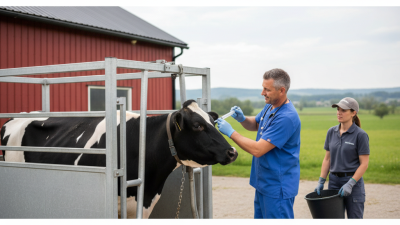
Overview of Different Animal Identification Techniques and Technologies

Animal identification is crucial for effective livestock management. Various techniques are available, each with unique benefits and challenges. Ear tags remain the most popular method. According to recent industry reports, about 70% of farmers in the U.S. rely on ear tags for identification. They are simple to use and economical. However, they can be lost or damaged easily.

Microchipping offers a more permanent solution. This method has gained traction, especially in veterinary practices. A study showed that microchipping increases traceability by 30% compared to traditional methods. Still, the cost can be a barrier for small-scale farmers. While technology improves animal management, challenges persist. Training staff on new systems often takes time. Not all employees adapt quickly.

Visual identification methods, like color coding, also serve a purpose. They are easy to implement but can be prone to human error. The combination of methods can enhance accuracy. However, in practice, inconsistencies often arise. Finding the right balance between cost and effectiveness is essential.

How to Effectively Use Animal Identification Techniques for Better Management?

Identification Technique Description Advantages Disadvantages Best Use Cases
Ear Tags Small tags attached to the ear of livestock for visual identification. Cost-effective; easy to read; visible from a distance. Prone to loss; can become unreadable; some animals may resist. Beef and dairy cattle; sheep; goats.
Microchipping Implanting a small chip under the skin that can be scanned for identification. Permanent; not prone to loss or damage; low maintenance. Higher initial cost; requires scanner to read. Pet identification; valuable livestock; animals in transit.
RFID Tags Radio-frequency identification tags that can be scanned to retrieve information. Fast identification; can store multiple data points; no line of sight needed. Higher cost; requires a reader; interference possible. Large scale farming; tracking animal movements.
Tattooing Inking a unique number or mark on an animal's skin. Permanent; can be done quickly; resistant to loss. Can be difficult to read; painful for the animal; risk of infection. Show animals; breeding stock.
DNA Sampling Collecting samples (like from blood or hair) to identify the genetic identity. High accuracy; useful for pedigree tracking. Costly; requires laboratory analysis; time-consuming. Breeding programs; conservation efforts.

Implementing RFID and GPS for Efficient Animal Tracking

How to Effectively Use Animal Identification Techniques for Better Management?

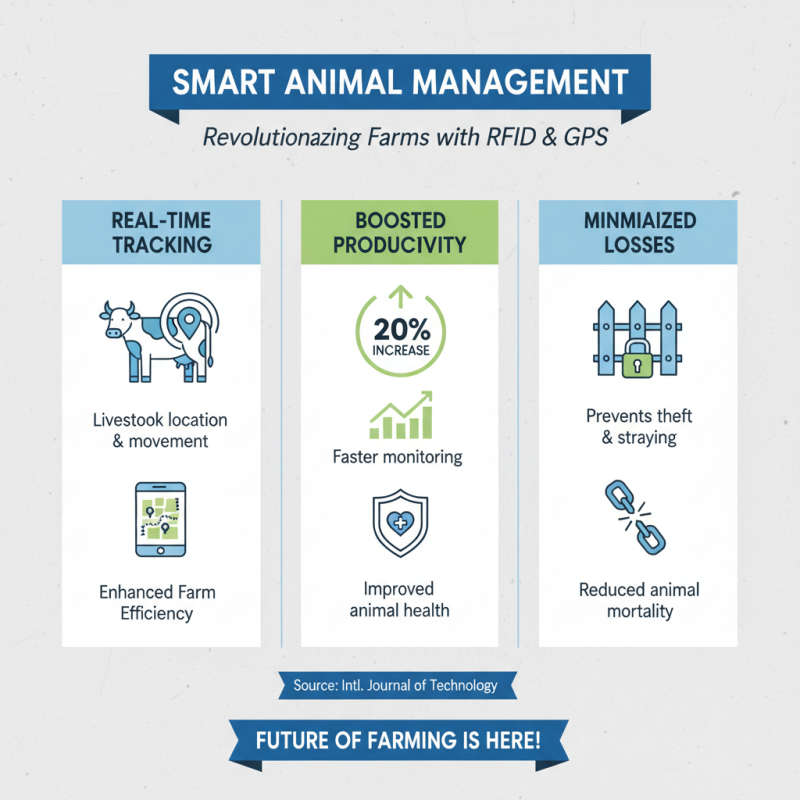
Implementing RFID (Radio Frequency Identification) and GPS (Global Positioning System) technology can revolutionize animal management practices. These tools provide real-time tracking of livestock, enhancing overall farm efficiency. A report from the International Journal of Technology explains that farms utilizing RFID can see a 20% increase in productivity. This technology simplifies monitoring animal health and minimizing loss.

Animal owners can use RFID tags to track individual animals. Each tag carries unique data, making it easy to manage breeding and health records. GPS, on the other hand, allows for tracking animals' movements across vast pastures. Farmers can reduce labor costs and find animals quickly when they stray.

Tip: Regularly audit your RFID system. Errors can occur, and keeping data accurate is crucial.

Many farms still struggle with implementation. Not all staff are trained properly, leading to gaps in data collection. Training is essential when adopting these technologies. Ensure every team member understands how to use the systems effectively.

Tip: Schedule frequent training sessions and involve your team in setting benchmarks.

Investing in RFID and GPS can be costly initially, but studies suggest savings in feed and labor costs can exceed 30%. Animal identification techniques undeniably yield better management outcomes.

Best Practices for Record Keeping and Data Management

How to Effectively Use Animal Identification Techniques for Better Management?

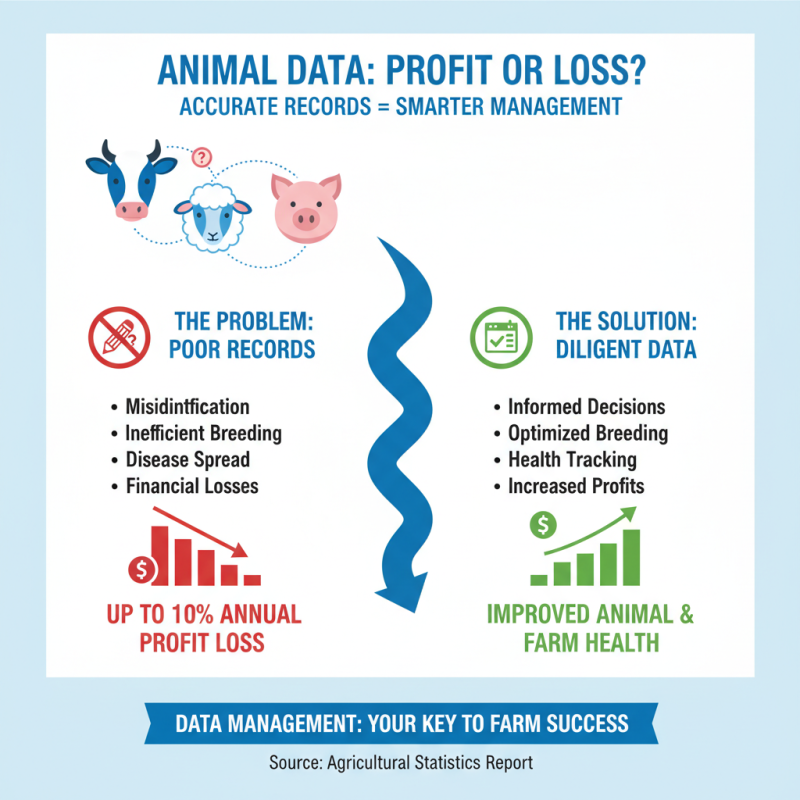
Maintaining accurate records is key to effective animal identification and management. Data management may seem tedious, but neglecting it can lead to significant losses. According to the Agricultural Statistics Report, poor record-keeping may cost farmers up to 10% of their annual profits. This illustrates the importance of diligent data practices.

Tips: Utilize digital tools for better record-keeping. Apps and software can simplify capturing each animal's ID, health history, and breeding information. A centralized database not only saves time but also reduces errors.

Many farm operations struggle with inconsistent data entry. Human error can disrupt the entire management system. Regular audits can help. Checking records monthly ensures accuracy and encourages accountability among staff. By addressing inaccuracies promptly, operations can enhance efficiency and reduce potential financial impacts.

Tips: Train staff regularly on best practices. Provide clear guidelines and expectations for record-keeping. This fosters a culture of precision and reduces unreliable data generation. Effective communication about the importance of these records can transform management practices.

Enhancing Livestock Health and Productivity through Identification Techniques

Effective animal identification techniques are critical for enhancing livestock health and productivity. In a study published by the Food and Agriculture Organization (FAO), it was reported that farms utilizing identification systems saw an increase in overall productivity by up to 25%. Proper identification can lead to improved disease management. When animals are tracked, it’s easier to monitor health issues promptly. Delayed responses to health concerns can lead to significant losses.

Integrating technologies like RFID tags and ear tags can improve data collection. A report from the Livestock Conservancy noted that precision agriculture techniques can help farmers manage livestock better. However, not all farmers adopt these methods. Many still rely on traditional identification, risking inefficiencies. While technology offers benefits, some challenges remain. Initial costs for implementation can deter smaller farmers. Additionally, maintaining the technology requires ongoing training and resources.

The importance of regular monitoring cannot be overstated. Regular checks are essential for maintaining animal welfare. However, some farmers overlook this due to time constraints. Consistent tracking of health records can revolutionize farming practices. Livestock with documented health histories have better breeding outcomes. Yet, without a commitment to data accuracy, the effort can be futile. This highlights a crucial area for improvement in the agricultural sector.