

Leave Your Message
A Comprehensive Guide to Poultry Vaccines and Immunity
Key Takeaways
- Vaccines help keep poultry safe from sickness and death.
- Picking the right vaccine—live, killed, or mixed—depends on your birds' needs.
- Using new tools, like Auto Syringes or oral vaccines, makes vaccinating easier and keeps birds healthy.
Overview of Poultry Vaccines
History and Development of Poultry Vaccines
The development of poultry vaccines has revolutionized the poultry industry. Early vaccines, such as those for fowl cholera, emerged in the mid-20th century, marking a turning point in disease control. Over time, advancements in biotechnology have led to the creation of more effective vaccines, including live attenuated and recombinant types. These innovations have significantly reduced disease outbreaks, ensuring healthier flocks and higher productivity. Today, vaccines are a cornerstone of modern poultry farming, helping you combat both endemic and emerging diseases.
Common Diseases Prevented by Vaccines
Vaccines target several prevalent poultry diseases, safeguarding your flock from severe health and economic losses. The table below highlights key diseases and the effectiveness of their respective vaccines:
| Disease | Market Share | Effectiveness |
|---|---|---|
| Avian Influenza | 25% | Vital in controlling outbreaks and preventing zoonotic transmission. |
| Newcastle Disease | 30% | Most effective method to prevent significant mortality in poultry. |
| Marek's Disease | 15% | Crucial for controlling tumors and ensuring long-term protection in intensive farming systems. |
| Others | 10% | Important for overall health and productivity, addressing niche diseases. |
By vaccinating against these diseases, you can protect your flock from devastating losses and ensure consistent production.
Importance of Vaccination in Poultry Farming
Vaccination plays a critical role in sustainable poultry farming. It enhances flock health, reduces the need for antibiotics, and improves feed efficiency. Here’s how vaccination benefits your operations:
- Prevents disease outbreaks, minimizing mortality and production losses.
- Reduces reliance on antibiotics, addressing concerns about resistance.
- Improves feed conversion rates, leading to better growth and lower resource use.
Additionally, vaccination offers significant economic advantages:
- Increases growth rates by preventing diseases that hinder development.
- Reduces feed costs through improved feed conversion.
- Lowers mortality rates, ensuring more birds reach market weight.
- Cuts treatment costs by preventing outbreaks.
- Enhances marketability, as vaccinated flocks produce safer products.
By prioritizing vaccination, you not only protect your flock but also boost profitability and sustainability in your poultry farming operations.
Types of Poultry Vaccines
Live Attenuated Vaccines
Live attenuated vaccines contain weakened forms of pathogens that stimulate a strong immune response. These vaccines replicate in the host, mimicking natural infection and inducing both mucosal and systemic immunity. You can administer them through drinking water, sprays, or eye droppers, making them ideal for mass vaccination.
Advantages:
- Rapid onset of immunity.
- Suitable for large flocks due to ease of administration.
- Induces long-lasting immunity by activating multiple immune pathways.
Disadvantages:
- Requires strict cold chain storage to maintain viability.
- May cause mild disease symptoms in immunocompromised birds.
- Risk of spreading vaccine strains to neighboring flocks.
Inactivated (Killed) Vaccines
Inactivated vaccines use pathogens that have been killed through physical or chemical processes. These vaccines are safer as they do not replicate in the host, reducing the risk of adverse reactions. However, they require intramuscular injections, which can be labor-intensive for large flocks.
| Feature | Live Attenuated Vaccines | Inactivated Vaccines |
|---|---|---|
| Mechanism | Contains attenuated viral strains that induce immune responses | Made inactive by physical or chemical means, maintaining protein structure |
| Immune Response | Stimulates both cell- and antibody-mediated immunity | Less immunogenic, does not promote cell-mediated response |
| Administration | Can be administered through natural routes, suitable for large flocks | Requires intramuscular injection, generally unsuitable for mass application |
| Safety | Potential to cause disease in immunocompromised hosts | Considered safer, but carries risk of accidental self-injection |
| Long-term Immunity | Generally provides shorter immunity | Confers long-term immunity, but requires multiple inoculations |
| Cost | Generally lower cost for mass vaccination | Relatively expensive to produce |
Subunit and Recombinant Vaccines
Subunit and recombinant vaccines represent advanced technologies in poultry immunization. These vaccines use specific proteins or genetic material from pathogens to trigger immunity without introducing the entire organism. For example, recombinant vaccines can target multiple antigens, offering broad protection against diseases like Salmonella. They are particularly effective in reducing disease transmission and improving flock health.
Pros and Cons of Different Vaccine Types
Each vaccine type has unique benefits and limitations. Live attenuated vaccines provide rapid and robust immunity but require careful handling. Inactivated vaccines are safer but less immunogenic and labor-intensive to administer. Subunit and recombinant vaccines offer precision and multi-disease protection but may involve higher production costs. Choosing the right vaccine depends on your flock's needs, disease prevalence, and operational capacity.
How Vaccines Build Immunity in Poultry
Mechanisms of Action in Poultry Immune Systems
Vaccines train the immune system to recognize and combat specific pathogens. When you vaccinate your flock, the bird’s body perceives an invasion and activates its immune defenses. This process involves the production of antibodies that neutralize the pathogen and prevent future infections.
Different vaccine types stimulate immunity in unique ways:
- Live attenuated vaccines contain weakened pathogens that replicate in the bird, mimicking a natural infection. This triggers both cell-mediated and antibody-mediated immune responses, offering robust protection.
- Inactivated vaccines, which use killed pathogens, are safer but less immunogenic. They often require booster doses to achieve effective immunity.
- DNA vaccines enable the bird’s cells to produce antigens directly, fostering a targeted immune response.
By understanding these mechanisms, you can choose the most suitable vaccine for your flock’s needs.
Role of Vaccines in Preventing Disease Outbreaks
Vaccination is the cornerstone of disease prevention in poultry farming. It protects your flock from infectious diseases like Newcastle Disease and Avian Influenza, which can devastate poultry populations. Vaccines enhance flock health, reduce mortality, and improve productivity.
Vaccinated birds develop immunity, minimizing the risk of outbreaks. This not only safeguards your flock but also ensures economic stability by reducing treatment costs and production losses. Healthy, vaccinated flocks produce higher-quality meat and eggs, boosting your farm’s profitability.
Importance of Herd Immunity in Poultry Flocks
Herd immunity occurs when a significant portion of your flock becomes immune, reducing the spread of disease. Achieving this requires consistent and effective vaccination. However, challenges like vaccine failure, improper handling, and economic constraints can hinder this process.
Stress from overcrowding or poor management can also weaken birds’ immune responses. By addressing these issues and ensuring proper vaccination protocols, you can protect your flock and maintain herd immunity, creating a healthier and more productive farming environment.
Challenges in Poultry Vaccine Development and Application
Limitations in Vaccine Efficacy
Several factors can limit the effectiveness of poultry vaccines, impacting your flock's health and productivity. These include:
- Single Adjuvants: Many vaccines rely on single adjuvants, which often produce weak and short-lived immune responses.
- Concurrent Vaccinations: Administering multiple vaccines simultaneously can reduce antibody production and increase health risks.
- Improper Timing: Vaccinating during heat stress or other adverse conditions can lower efficacy.
- Local Strain Mismatches: Vaccines not tailored to local antigens may fail to protect against regional disease strains.
- Booster Doses: Skipping booster vaccinations can result in insufficient immunity.
Environmental factors like poor ventilation, overcrowding, and inadequate nutrition further weaken vaccine-induced immunity. Addressing these challenges requires careful planning and adherence to vaccination schedules.
Storage and Distribution Challenges
Maintaining vaccine potency during storage and transportation is critical. Vaccines often require cold chain storage, but rural areas frequently lack the infrastructure to support this. Around 25% of poultry farmers face issues with vaccine degradation due to improper temperature control. Mishandling during transport or storage can render vaccines ineffective. Limited access to quality vaccines in remote regions also poses a significant barrier. Ensuring proper storage conditions and improving distribution networks can help overcome these challenges.
Vaccine Resistance and Emerging Diseases
Vaccine resistance arises when vaccines fail to provide adequate protection. High maternal antibody levels in chicks can neutralize live vaccines, reducing their effectiveness. Stress from environmental extremes, poor nutrition, or overcrowding can impair immune responses. Additionally, strain mismatches between vaccines and circulating pathogens, such as infectious bronchitis, can lead to outbreaks despite vaccination. Emerging diseases like new strains of Avian Influenza further complicate disease management. Developing vaccines that address these evolving threats is essential for safeguarding your flock and maintaining productivity.
Future Trends in Poultry Vaccine Technology
Advances in Genetic Engineering for Vaccines
Genetic engineering is transforming poultry vaccine development. Recent advancements in biotechnology have enabled the creation of more effective and targeted vaccines. Techniques like gene editing allow scientists to design vaccines that address specific pathogens, improving disease prevention in poultry. These innovations not only enhance the efficacy of existing vaccines but also pave the way for new solutions to combat emerging diseases. By adopting these advanced vaccines, you can ensure better protection for your flock and reduce the risk of outbreaks.
Development of Oral and Spray Vaccines
Oral and spray vaccines are revolutionizing poultry vaccination practices. These methods simplify administration and improve efficiency, especially for large flocks.
- Spray vaccination works well for both day-old chicks and housed birds.
- The ideal droplet size, between 100-300µ, ensures even coverage and effective vaccine uptake.
- Modern spray devices allow precise control over droplet size, enhancing inhalation and delivery.
- These technologies minimize water usage while enabling the vaccination of thousands of birds in a short time.
The ocular oral route, a key method for vaccine absorption, highlights the shift toward non-invasive techniques. By adopting oral and spray vaccines, you can streamline operations and reduce labor costs.
Integration of Vaccination with Precision Farming
Precision farming integrates advanced technologies to optimize poultry health management. Automated systems monitor flock health, ensuring timely vaccination and reducing human error. Data-driven insights help you identify disease risks and adjust vaccination schedules accordingly. This approach not only improves vaccine efficacy but also enhances overall flock productivity. By combining vaccination with precision farming, you can achieve sustainable and efficient poultry operations.
Role of Automatic Syringe for Animals in Vaccine Administration
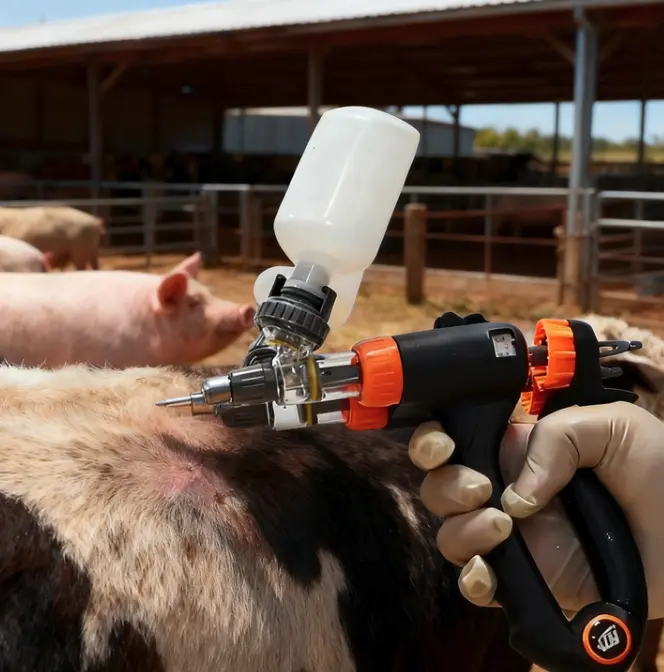
The Automatic Syringe for animals has become a game-changer in poultry vaccination. These devices preset doses, ensuring consistency and reducing hand fatigue during repetitive tasks. Modern systems can vaccinate up to 3,500 chicks per hour, maintaining accuracy and minimizing tissue damage. Attachments that decontaminate needles between birds further reduce the risk of cross-contamination. By using an automatic syringe for animals, you can enhance efficiency, improve vaccine delivery, and protect your flock from disease.
Poultry vaccines are essential for preventing diseases, improving productivity, and ensuring economic stability. Vaccination offers numerous benefits:
- Increased growth rates and improved feed conversion reduce costs.
- Lower mortality rates and enhanced marketability boost profitability.
Staying informed about advancements, such as combination vaccines and automated systems, ensures your flock remains healthy and competitive in a growing industry.
FAQ
What is the best way to store poultry vaccines?
Vaccines require cold chain storage between 35°F and 45°F. Use insulated containers during transport to maintain potency and avoid exposure to direct sunlight or heat.
How can you ensure proper vaccine administration?
Follow manufacturer guidelines for dosage and method. Use clean equipment, maintain hygiene, and monitor birds post-vaccination for any adverse reactions or signs of stress.
Are there risks of over-vaccinating poultry?
Over-vaccination can stress birds and suppress immunity. Stick to recommended schedules and avoid unnecessary boosters unless advised by a veterinarian.
💡 Tip: Always consult a poultry health expert to tailor vaccination programs to your flock's specific needs.