

Leave Your Message
What Is the Best Injection for Piglets? A Practical Guide to Veterinary Syringes, Needles & Auto Injectors
Introduction
If you manage a farrowing house or purchase supplies for a swine operation, your first question is simple: what is the best injection for piglets—and which tools deliver it reliably? For most farms worldwide, the cornerstone early-life injection is iron, and the best results come from pairing the right product with the right Veterinary Syringe, Syringe Needle, and workflow. This guide explains the recommended injections and techniques for piglets, then maps them to fit-for-purpose equipment—from Disposable Needles and syringes to automatic syringe systems—so procurement teams, distributors, and farm managers in North America, Europe, LATAM, MENA, and APAC can standardize, scale, and train with confidence.
iron is the universal early-life injection
Newborn piglets are born with low iron reserves, and sow’s milk doesn’t supply enough to prevent anemia. Standard practice is an intramuscular (IM) iron injection (iron dextran or gleptoferron) within the first 1–3 days of life—typically 100–200 mg elemental iron per piglet, given in the neck. This simple step supports hemoglobin formation and uniform pre‑weaning growth. Merck Veterinary Manual+1
Choose the correct route and site (IM vs SC)
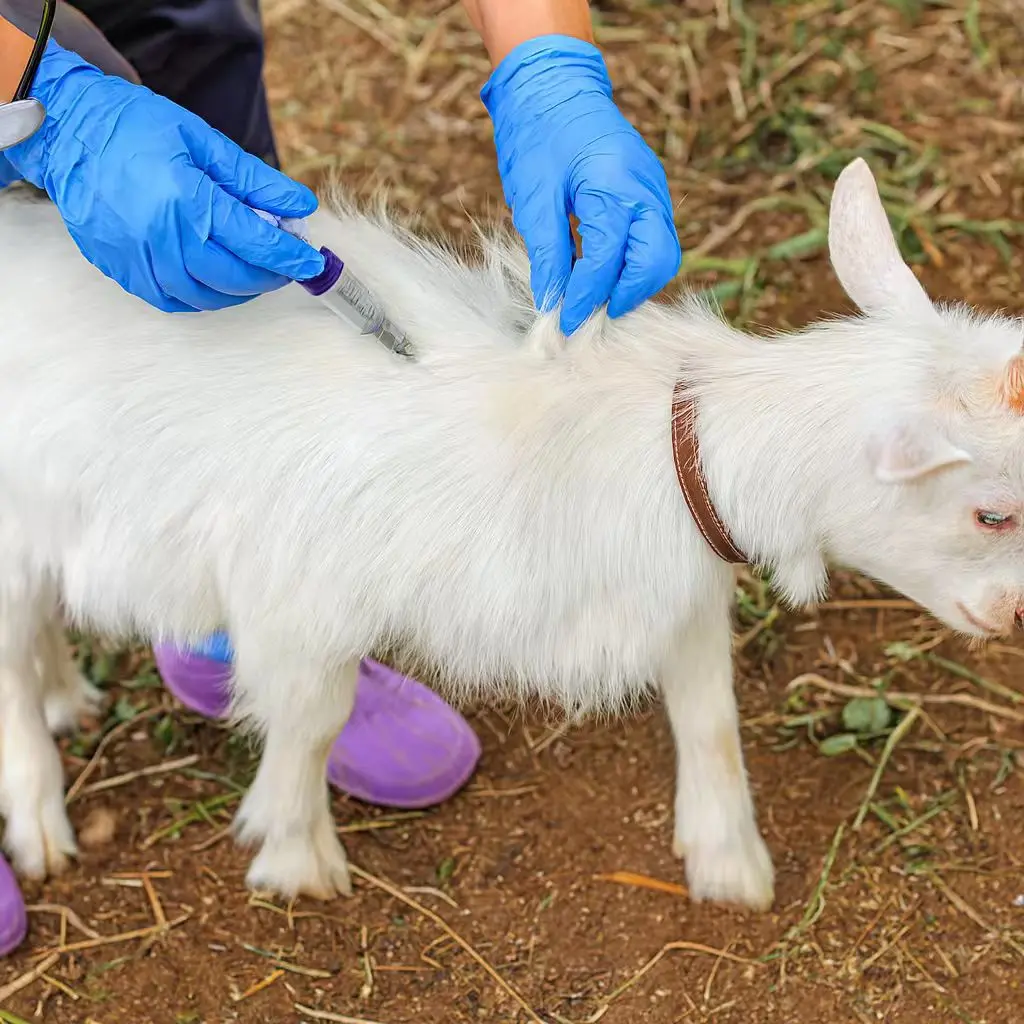
IM (intramuscular) injections for piglets are placed into the neck muscles, just behind and below the ear, never in the ham to protect meat quality. SC (subcutaneous) injections in small pigs can be given in the loose skin of the flank or behind the shoulder; in larger pigs the area behind the ear is common. For baby pigs, limit SC volumes to ~2 mL per site to avoid tissue compromise. Always inject into clean, dry skin and follow farm SOPs. ouv.vt.edu+2thepigsite.com+2
Select the right veterinary syringe and needle
Needle gauge & length for piglets
Use the right-size injection needles to protect tissue and ensure the dose reaches its target. Industry references recommend 18–20 gauge, ½–⅝ inch for piglets (IM). As pigs grow, move to thicker and longer needles; the Common Swine Industry Audit notes that 16G or larger needles must be detectable. Keep a farm chart at point of use to standardize choices by weight class. porkcdn.com
Quick reference (typical starting points):
Manual vs. automatic delivery
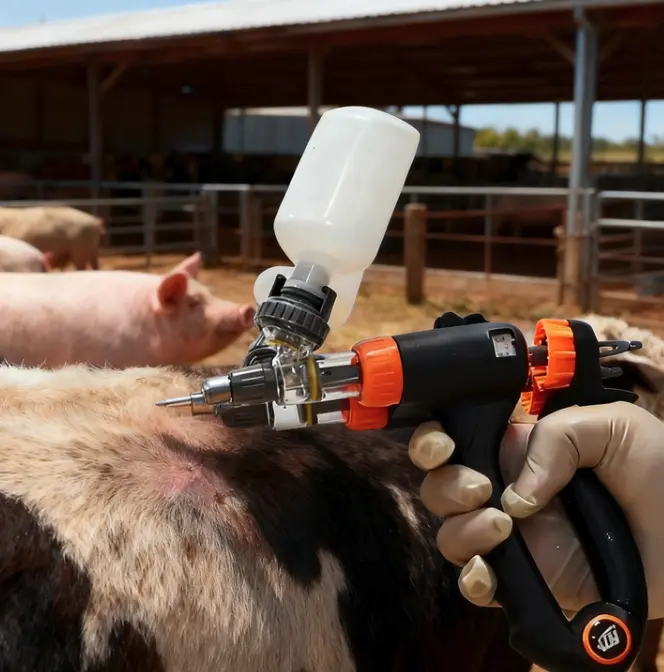
Small batches or precision micro‑dosing, a precision syringe (e.g., 0.5–2 mL injection syringe with needle) gives excellent control. For processing days and mass vaccination, a self refilling syringe (also called automatic syringe injector, auto injector syringe, auto syringe, veterinary automatic syringe, or veterinary injector) boosts throughput and dose consistency while reducing hand fatigue. Bottle‑mount or tubing‑fed systems support continuous flow and reduce vial handling. Many swine teams also adapt an automatic syringe for cattle to pig work because the mechanics are identical; just match the vet needles and syringes to piglet sizes. (See buyer’s checklist below.)
Materials, connections & volumes
-
Plastic syringe (polypropylene) bodies are light and economical; glass syringe barrels resist solvents and heat and suit repeated sterilization.
-
Prefer Luer‑lock over slip‑tip for a secure fit between injection needles and syringes—critical when using a long syringe needle or higher back‑pressure vaccines.
-
A typical 10ml needle request usually means a 10 mL syringe + needle set; choose volume to match the dose and workflow (e.g., 1–2 mL fixed settings for piglet iron).
-
A fixed needle syringe (needle bonded to the barrel) reduces dead space for very small doses; syringes without needles let you attach the exact vet needles you need.
-
Many needle hubs are polymer, so the term plastic syringe needle often refers to a plastic hub with a stainless‑steel cannula—standard in livestock.
Throughput & biosecurity tips that protect pigs (and people)
-
Change needles regularly. A sharp needle reduces tissue damage and ensures accurate placement; don’t use the same needle to draw from a multi‑dose vial and inject pigs. swine.extension.org
-
Set a change protocol. On many farms, that means a new needle for each litter (or more often if disease risk is high); follow your veterinarian’s biosecurity plan. pig333.com
-
Control per‑site volumes. For baby pigs, limit SC volumes to ~2 mL per site; split larger doses between sites. research.vt.edu
-
Document broken needles. Record animal ID, needle size, site, and operator; follow your packer’s policy. ouv.vt.edu
Buyer’s checklist (search‑intent terms you may be looking for)
When you spec or source veterinary needles and syringes, match the product to the task:
-
Vet syringes / veterinary syringe / veterinary injection syringe / injection syringe – Core workhorses for IM/SC dosing on piglets and sows.
-
Syringes and needles / injection needles and syringes / vet needles and syringes – Matched sets for one‑box purchasing and exact gauge/length control.
-
Feeding syringe / feeding tube syringe – For colostrum, electrolytes, or oral rehydration; not for injections but frequently bundled in piglet care kits.
Compliance notes for buyers and distributors
We supply and support swine customers across the U.S. & Canada, EU/UK, Australia–New Zealand, ASEAN (VN/TH/PH/MY/ID), Latin America, and MENA–Africa. Metric and imperial gauges are in stock, multilingual IFUs are available on request, and OEM/ODM options help local partners meet tender specs and private‑label requirements. (Compliance documentation and samples available through regional sales.)
So…what is the “best” injection for piglets?
In practice, an iron IM injection in the neck within 1–3 days is the universal first step for healthy growth. Pair that with the right needle (18–20G, ½–⅝"), a reliable injection syringe with needle (manual for precision, self refilling syringe for speed), and disciplined needle‑change SOPs—and you’ll maximize piglet performance while protecting carcass quality and staff safety. Merck Veterinary Manual+2porkcdn.com+2
Conclusion
The “best injection” for piglets starts with iron and ends with execution: correct route and site, correct gauge and length, and smart equipment choices—from vet needles to automatic syringe systems. Whether you’re a purchasing manager, distributor, or farrowing supervisor, standardizing on proven veterinary needles and syringes (and training your team to use them) pays off in uniform growth and fewer errors.
Ready to equip your farrowing team?
Explore our Veterinary Injection Solutions: veterinary syringe, vet needles and syringes, automatic syringe injector, syringes and needles, disposable needles and syringes, self refilling syringe.
Request a quote or samples from our sales team—global shipping and OEM support available.
Key references
-
Merck Veterinary Manual—Piglet iron supplementation (100–200 mg IM in first 3 days). Merck Veterinary Manual
-
Uniferon® 200 (iron dextran) label—1 mL (200 mg iron) IM at 1–3 days. VetLabel.com
-
PQA Plus® Needle Size Reference—18–20G, ½–⅝" for piglets; CSIA detectable‑needle note. porkcdn.com
-
Virginia Tech SOPs—IM technique, SC sites, and per‑site volume guidance for swine. ouv.vt.edu+1
-
Extension & industry guidance—Needle‑change SOPs and biosecurity tips for swine injections. swine.extension.org+1
✍️ About the Author
Dr. Andrea Ding
Veterinary Trade manager | WANJIA Livestock Solutions Specialist