How to Choose the Right Veterinary Needles
Choosing Veterinary Needles is a small decision with visible consequences. A needle that is too large may cause avoidable tissue trauma. One that is too short may not reach the intended site. The right choice depends on the animal, the prescribed medication, the injection route, and the clinician’s technique. A calm patient on the examination table still needs careful assessment; coat thickness and body condition can change what works.
Needle gauges, lengths, materials, and hub designs can look like minor details in a supply cabinet. They are not. A clinician should check the product specifications and follow the veterinarian’s instructions rather than rely on habit alone. There is no universal needle for every animal or procedure. Even familiar choices deserve a second look.
An expert quotation needs a verifiable source. No article or named veterinary professional was supplied here, so attributing a quote to an invented expert would be misleading. A useful guiding principle for this article is: “Choose for the patient and procedure, not by habit.” It is an editorial line, not a verified quotation. That distinction matters. The guide will examine how needle gauge and length relate to common clinical considerations, what to inspect before use, and when to ask a veterinarian for direction. It will also note the limits of general advice. Practical judgment improves with training, but sometimes the best choice is not obvious.
Understanding Veterinary Needle Types and Their Intended Uses
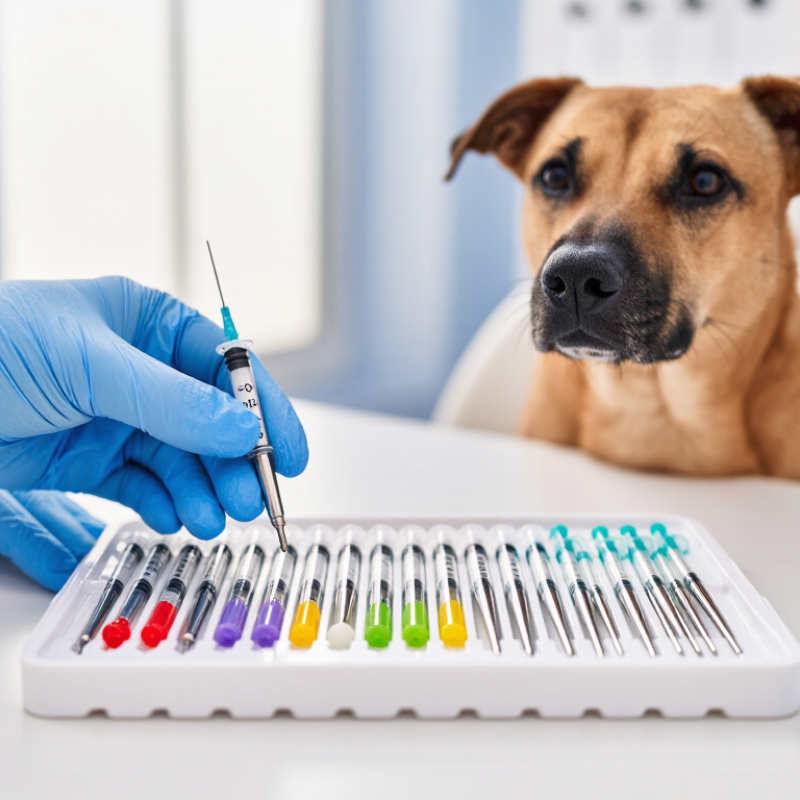
Veterinary needles differ by gauge, length, bevel, and purpose—not simply by animal size. A standard bevel-tip hypodermic needle is used for many injections, while gauge and length should match the medication, route, site, and patient. Wider bores can help viscous fluids pass; finer bores may limit tissue trauma but slow delivery. Small details matter. Follow the medication label and clinic protocol.
Blunt fill needles are designed for drawing medication from suitable vials, not for injection. Replace them with the prescribed sterile injection needle before administration. Winged infusion sets can support access to small peripheral veins when a veterinary professional considers them appropriate. For example, a tiny patient’s shallow vein calls for a different approach than a large animal’s deeper injection site. Gauge charts help, but they are not the whole answer; actual tissue depth and fluid thickness can complicate a neat chart.
Safe handling matters too. CDC’s 2008 sharps-injury prevention workbook cites an estimate of 385,000 needlestick and other sharps injuries annually among U.S. hospital-based healthcare personnel. That figure is not a veterinary estimate, but it underscores why needle selection, secure handling, and immediate disposal belong together. If a needle bends, blunts, or meets unexpected resistance, pause and reassess rather than forcing it.
How to Choose the Right Veterinary Needles - Understanding Veterinary Needle Types and Their Intended Uses
Needle selection depends on the medication’s thickness and volume, the injection route, the animal’s size and the injection site. The examples below are general guidance, not a substitute for veterinary direction.
| Needle gauge |
Approx. outer diameter |
Common intended uses |
Selection considerations |
| 18G |
1.2 mm |
Drawing up relatively viscous solutions or use where a larger-bore needle is required, often in larger-animal settings. |
Allows faster flow but creates a larger puncture; generally not chosen for routine small-animal injections. |
| 20G |
0.9 mm |
Drawing up thicker medications and selected injections when the product instructions or veterinary protocol call for a wider bore. |
Balance flow needs against patient size, route and comfort. A separate needle may be used for drawing up and injecting. |
| 21G |
0.8 mm |
General-purpose use in some medium- and large-animal procedures; may be suitable for certain intramuscular or subcutaneous injections. |
Confirm that the needle length reaches the intended tissue without being unnecessarily long for the site. |
| 22G |
0.7 mm |
Common option for routine injections when medication viscosity and the selected route are compatible. |
Often a practical middle ground between flow and needle diameter; suitability varies by animal and product. |
| 23G |
0.6 mm |
Small-volume injections and some routine injections in smaller patients, when appropriate for the medication. |
Thinner needles can reduce puncture size, but may make viscous medication slower to administer. |
| 25G |
0.5 mm |
Often considered for small-volume subcutaneous injections in cats and small dogs, subject to veterinary guidance. |
Use only when the medication can pass through the smaller bore and the needle is suitable for the intended route. |
| 26G–27G |
About 0.45–0.4 mm |
Selected small-volume injections, including some subcutaneous or intradermal procedures performed under an appropriate protocol. |
Very fine needles may bend more easily and can slow administration; they are not appropriate for every medication or injection route. |
Needle type and safe use: Choose the bevel and needle length for the intended route and site; use a safety-engineered needle when appropriate and available. Use a sterile, single-use needle for each patient and dispose of it in an approved sharps container. Gauge diameters are approximate and may vary slightly by standard and manufacturer.
Matching Needle Choice to the Animal and Procedure
Matching needle choice to an animal and procedure starts with the tissue target, not a default size.
A short, fine needle may suit a small patient receiving a low-viscosity subcutaneous medication. A thicker solution or deeper muscle may need a wider bore and greater length.
Gauge numbers work in reverse: a higher gauge means a thinner needle.
Small detail, big difference.
For adult cattle, the National Beef Quality Assurance Manual recommends 16- or 18-gauge, one-inch needles for most intramuscular injections, given in the neck. That guidance is species- and procedure-specific, not a template for every animal. In cats, AAHA/AAFP vaccination guidelines recommend rotating injection sites and using distal limb sites for certain vaccines. The exact site and route should follow the product instructions and veterinary direction.
Check the animal’s size, body condition, medication thickness, and intended tissue depth before choosing. Restraint matters, too; a struggling patient can make a suitable needle harder to use safely. Use a sterile, sharp needle, and replace it if it bends or becomes contaminated.
In practice, the judgment is not always tidy. When depth or route is uncertain, pause and confirm rather than guessing.
Selecting Needle Gauge and Length for the Injection Site
Selecting Needle Gauge and Length for the Injection Site
Needle choice should match the route, medication, and animal—not just the injection site. Gauge numbers work in reverse: a 25-gauge needle is thinner than a 20-gauge needle. A finer needle may reduce tissue trauma, but thick fluids can require a wider bore.
For subcutaneous injections, the needle must pass through the skin and enter the loose tissue beneath it. Intramuscular injections need enough length to reach muscle without going too deep.
Body size and body condition matter; a short needle may miss the target in a heavily muscled patient, while a long one can overshoot in a small animal.
Site selection and guidance
Site selection is part of safe technique. The 2020 AAHA/AAFP Feline Vaccination Guidelines recommend specific, distal-limb or tail sites for feline vaccines, supporting clear recording of where each product was given. Their guidance is feline-specific, not a universal needle chart. Match needle length to the patient and route, and follow the medication’s directions. There is no perfect one-size rule.
Tips
Check the intended tissue before choosing. Stabilize the skin or muscle, and stop if resistance or unexpected pain occurs. Reassess the choice when the animal’s size, coat, or medication changes; small differences can matter.
Checking Syringe Compatibility and Needle Features
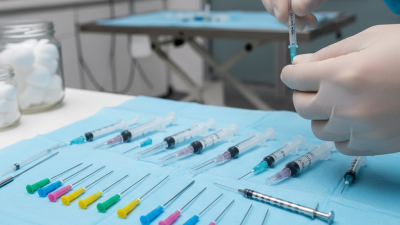
Before choosing a veterinary needle, check that its hub matches the syringe tip. Common connections include slip-tip and locking styles, but confirm compatibility using the product instructions. The fit should be secure, not forced. A loose connection may leak, while forcing parts can cause damage. Check the syringe scale, too. A clearly marked barrel can make a prescribed dose easier to measure.
Needle features matter as much as fit. A higher gauge number generally means a thinner needle, but the right gauge and length depend on the animal, injection site, medication, and route. Follow the veterinarian’s instructions rather than guessing from appearance. A needle that looks suitably small may not be appropriate for every task. I’ve found it easy to focus on gauge and overlook length; that detail deserves a second check. Inspect the package and needle before use, and do not use damaged or unsterile equipment.
Tips: Match the needle hub to the syringe, then verify the dose markings. Keep the cap on until use. If the connection feels loose or the prescribed size is unclear, pause and ask the veterinary team.
How to Choose the Right Veterinary Needles: Syringe Compatibility and Needle Features
Needle gauge and outer diameter: Higher gauge numbers indicate thinner needles. These are approximate nominal outer diameters; actual dimensions can vary by standard and product. Check the syringe connection type (such as Luer slip or Luer lock), needle length, and intended use to confirm compatibility and suitability.
Applying Safe Handling and Sterility Practices
How to Choose the Right Veterinary Needles
Applying Safe Handling and Sterility Practices
Choose a needle suited to the animal, procedure, medication, and injection site. Gauge and length matter, but safe handling matters just as much. Check the sterile package for tears, moisture, or a damaged seal before opening it. Check the expiry date, too. Small details matter. Wash or sanitize your hands, prepare a clean work surface, and open the package only when you are ready to use the needle. Avoid touching the needle shaft or the connection point.
Tips: Keep the needle capped until use. If it touches a nonsterile surface, becomes bent, or its sterility is uncertain, replace it. Do not reuse a single-use needle. After use, place it directly into an approved sharps container; do not recap it by hand. Follow your clinic’s handling and disposal procedures.
A calm setup helps prevent rushed movements. Restrain the animal appropriately and ask a trained colleague for help if it is moving or distressed. Pause before use. It is easy to focus on selecting the correct size and overlook where the needle is placed between steps. That is worth reflecting on, especially during busy appointments. Keep clean supplies separate from used equipment, and never leave an exposed needle on a tray. When the procedure or needle choice is uncertain, consult a veterinarian or your clinic’s established protocol.