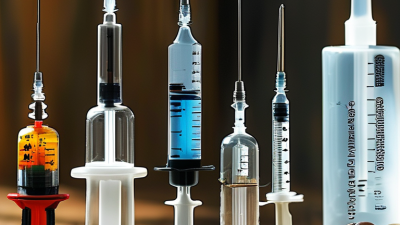
7 Tips for Choosing Animal Use Syringes?
Choosing the right Animal Use Syringes affects handling, dosing accuracy, animal comfort, and workplace safety. A syringe may look simple, yet its barrel size, graduations, needle fit, and plunger resistance can change the entire procedure. A 1 mL syringe may support precise small-volume dosing, while a larger barrel can reduce repeated refilling. Small details matter.
Animal-behavior specialist Dr. Temple Grandin has said, “You can’t just force an animal to do something; you have to make it want to do it.” Her principle applies here. A calm animal is easier to examine and less likely to move suddenly. Smooth handling starts with equipment that feels predictable in the operator’s hand. It also protects the animal from unnecessary pressure, delays, and repeated attempts.
This guide presents seven practical tips for selecting Animal Use Syringes. It considers dosage accuracy, needle compatibility, barrel visibility, grip, materials, sterility, and disposal requirements. Always compare the product with the medicine label and the manufacturer’s instructions. A syringe designed for one purpose may perform poorly in another. That mistake is easy to overlook.
Veterinary experience also teaches a humbling lesson: there is no universally perfect syringe. Species, body size, treatment volume, and operator technique all matter. Check the seal. Read the markings. Test the movement before use. When uncertainty remains, consult a licensed veterinarian or qualified animal-health professional. Good selection is not about buying the most expensive option. It is about choosing a reliable tool for a specific animal and procedure.
Define Dose and Capacity Using ISO 7886-1 Syringe Requirements
7 Tips for Choosing Animal Use Syringes
Define the dose before choosing syringe capacity. ISO 7886-1 provides requirements for manually operated, sterile, single-use hypodermic syringes. It addresses nominal capacity, graduated scales, leakage, and performance consistency. Select a syringe whose marked capacity closely matches the intended dose. A 1 mL syringe may offer clearer readings than a 10 mL syringe for a small volume. Capacity alone can mislead. Check the smallest graduation and confirm that the dose can be read accurately.
Tip 1
Match the graduation interval to the prescribed volume. Smaller intervals usually support finer visual measurement.
Tip 2
Inspect the barrel markings under normal clinic lighting. Tiny lines become difficult to read quickly.
Tip 3
Check the plunger movement before use. It should move smoothly, without sticking or sudden jumps.
Tip 4
Confirm the syringe’s compatibility with the selected needle and fluid. Thick liquids may need different handling than clear solutions.
Animal size also matters. A dose for a kitten, bird, or small rodent can expose measurement errors that seem minor on paper. Use a calibrated process, and have another trained person verify unusual volumes.
ISO 7886-1 does not replace veterinary judgment or product-specific instructions. It may also not cover every specialized veterinary syringe. That limitation deserves attention.
Review the declared capacity, scale units, sterile packaging, and intended application before purchasing. A practical record of repeated use can reveal whether the chosen capacity truly works in daily conditions.
Compare Graduation Accuracy and Dead Space for Small-Volume Doses
7 Tips for Choosing Animal Use Syringes
Small-volume doses demand more than a syringe that simply fits. Compare graduation accuracy first. A 0.01 mL scale can support finer adjustments than widely spaced markings. Read the barrel under normal clinic lighting. Faint lines create avoidable errors. Select a capacity that keeps the intended dose near the middle of the scale, not at its edge. Check whether the plunger stops align consistently with each graduation. They may not.
Dead space deserves equal attention. It is the fluid retained inside the hub and needle connection after delivery. With tiny doses, this leftover volume can become significant. A low-dead-space design may improve dose recovery and reduce variation between injections. However, connection type, needle fit, and handling technique still matter. Measure the actual delivered volume during validation. Do not rely only on packaging claims.
Choose clear markings, a stable barrel, and a plunger that moves smoothly without sudden jumps. Inspect the seal before use. A damaged seal can distort readings. Match the syringe scale to the animal’s prescribed volume and the expected viscosity. Record lot details when consistent dosing matters. Train users to remove bubbles without expelling excessive fluid. This is easy to underestimate. A rushed adjustment may change a small dose considerably. I would also review the selection after observing real handling, because a technically accurate syringe can still be awkward in gloved hands.
7 Tips for Choosing Animal Use Syringes: Graduation Resolution and Dead Space
Smaller graduation intervals make small doses easier to read and set accurately, while lower dead space helps reduce the amount of medication retained after delivery. The values shown are representative non-branded reference configurations commonly used for small-volume dosing; actual performance should be confirmed from the syringe specification and validation data.
Note: Graduation interval is a readability metric, not a certified accuracy result. For very small animal doses, select the smallest practical syringe with fine graduations and low dead space.
Assess Materials, Compatibility, and Biocompatibility Under ISO 10993
7 Tips for Choosing Animal Use Syringes
Assess Materials, Compatibility, and Biocompatibility Under ISO 10993
Animal-use syringes need more than a sharp needle and clear markings. Check the barrel, plunger, gasket, needle hub, and lubricant separately. Polypropylene may resist many solutions, while elastomers can absorb oils or release extractables. Do not guess. Request material declarations and sterilization details from the supplier.
ISO 10993-1:2018 separates biological contact into limited, prolonged, and permanent exposure. These categories cover up to 24 hours, over 24 hours to 30 days, and beyond 30 days. Match the evaluation to the actual use. Consider skin, tissue, blood, and mucosal contact. ISO 10993-5 addresses cytotoxicity, while ISO 10993-10 covers irritation and sensitization. Chemical characterization under ISO 10993-18 can reveal residues that visual inspection misses. Small details matter.
Check solution compatibility at the intended temperature and storage period. Observe swelling, cloudiness, leakage, and plunger resistance. Confirm dose accuracy with a calibrated test method. A 2024 veterinary-device market analysis reports continued growth in injectable treatment demand, increasing pressure for reliable disposable components. FDA biological-evaluation guidance also emphasizes contact duration, materials, and manufacturing residues. Yet supplier documents are not always complete. I have seen teams accept “medical grade” as proof of safety, which is insufficient. Retest after sterilization. Animal tolerance may differ across species, injection sites, and repeated dosing schedules.