Why Choose a Reusable Injection Syringe?
Choosing a Reusable Injection Syringe is not simply a matter of reducing packaging. The first question is whether the syringe is specifically designed and validated for repeated use. Many common syringes are intended for one use only, even when they look sturdy. A reusable model should have clear manufacturer instructions covering compatible medications, cleaning, sterilization, inspection, and replacement. Never share a syringe between people.
In a professional setting, staff can check the markings, barrel, and plunger before each use. The graduations should remain easy to read, and the plunger should move smoothly without sticking or leaking. Small defects matter. A cracked tip or worn seal can affect dose accuracy. Yet visual inspection alone cannot confirm that a device is sterile or safe, so approved processing procedures remain essential. That distinction is easy to overlook.
A reusable design may reduce disposable waste and support consistent supply planning when used as directed. It may also require careful tracking, validated processing equipment, and staff training. Those practical costs deserve attention. For patients, questions about the syringe’s intended use and handling are reasonable; a clinician or pharmacist can explain the product-specific instructions. Reusable does not automatically mean safer, cheaper, or more sustainable in every situation. The right choice depends on the device, its approved instructions, and the setting in which it is used.
What Is a Reusable Injection Syringe?
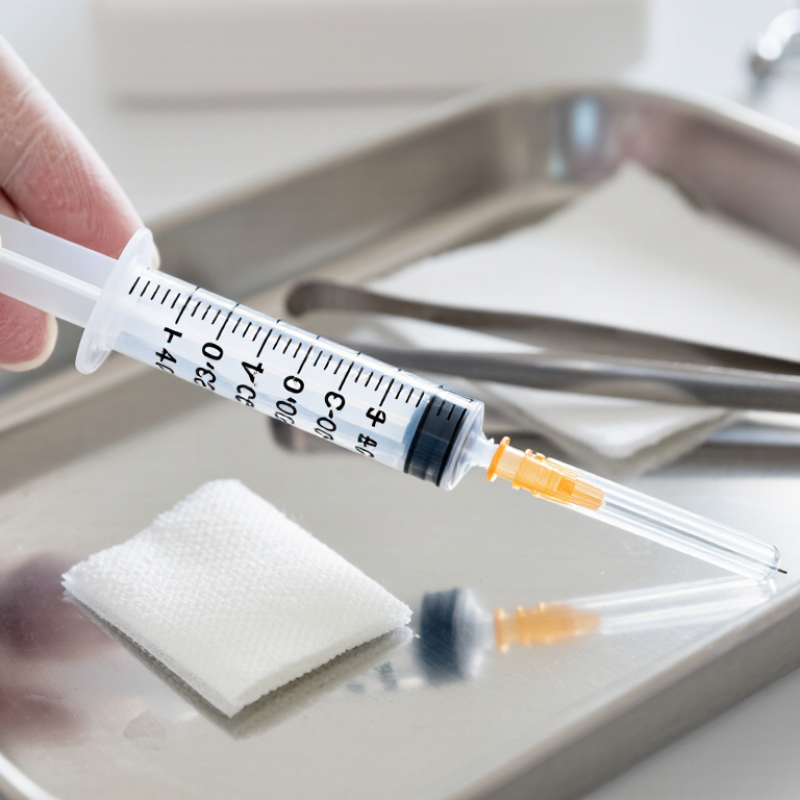
A reusable injection syringe is a medical device designed for repeated use after appropriate cleaning and sterilization. It usually has a marked barrel, a plunger, and a nozzle that connects to a compatible needle. The barrel holds the measured liquid, while the plunger helps draw it in and deliver it steadily. Some models use glass; others use durable materials made for repeated processing.
The term can be confusing. A syringe intended for reuse is not the same as a disposable syringe used more than once. Reuse is appropriate only when the device is specifically designed for it and its instructions describe validated reprocessing. In clinical settings, trained staff follow established procedures to clean, inspect, sterilize, and store reusable equipment. A cloudy barrel, damaged seal, or stiff plunger can affect measurement or function. Small details matter.
A reusable design may reduce discarded equipment, but it also requires careful handling and maintenance. It is not automatically safer or more practical in every setting. Users should check the device instructions and follow guidance from qualified healthcare professionals. If the syringe is intended for one-time use, it should not be reused.
How Reusable Syringes Are Designed and Used
Why Choose a Reusable Injection Syringe?
How Reusable Syringes Are Designed and Used
A reusable injection syringe is built for repeated use only when its instructions specifically allow it. Its barrel carries clear measurement marks, while the plunger should move smoothly without sticking. The tip must fit the intended needle or connector securely. Small details matter. A cloudy barrel, damaged seal, or worn markings can make accurate measurement harder.
Design varies by model and setting. Some syringes use materials that tolerate validated cleaning and sterilization processes; others are intended for one use only. Reusable models may come apart for cleaning, but components should be separated only as directed. In clinical practice, staff check the device, confirm its markings are readable, and follow the manufacturer’s instructions and local infection-control procedures. The exact steps matter.
After use, inspection is not a substitute for proper reprocessing. A syringe that looks clean may still carry contamination. Cracks, residue, stiff movement, or uncertain history are reasons to stop and seek guidance. This step is easy to rush; it should not be. When instructions are missing or unclear, do not assume the syringe can be reused.
Key Benefits Compared With Single-Use Syringes
Why Choose a Reusable Injection Syringe?
Key Benefits Compared With Single-Use Syringes
A reusable injection syringe can reduce the number of syringe bodies discarded in settings with repeat, predictable use. It may also ease routine purchasing and storage: fewer replacement packs mean less packaging on the shelf. That matters. But only syringes specifically designed for reuse should be considered; a single-use syringe must not be cleaned and reused.
Waste figures show why product choices deserve attention. The World Health Organization’s 2024 Health-care Waste fact sheet estimates that about 85% of health-care waste is non-hazardous, while 15% is hazardous. This is a broad estimate, not a syringe-specific measurement. Reusable equipment may reduce discarded items, but the real benefit depends on how often each syringe is used and how it is processed.
Reprocessing has a cost. It takes validated sterilization, trained staff, time, water, energy, and reliable tracking. A syringe with a damaged barrel or stiff plunger should not return to service. Not automatically. A clinic should follow the device’s instructions and assess its own workload, reprocessing capacity, and waste stream before switching; the WHO’s overall waste figures alone cannot prove which option has a smaller footprint.
Cleaning, Sterilization, and Safe Handling
Why Choose a Reusable Injection Syringe?
Cleaning, Sterilization, and Safe Handling
A reusable injection syringe is appropriate only when its manufacturer explicitly designs it for repeated use. Many medical syringes are single-use; cleaning does not make them safe to reuse. The World Health Organization estimates that around 16 billion injections are given worldwide each year, making consistent infection-control practices essential. Check the device instructions before use, and never assume that a familiar-looking syringe can be reprocessed.
Cleaning comes before sterilization. Disassemble the syringe only as directed, wash each component with the specified detergent, rinse thoroughly, and let parts dry fully. Inspect the barrel, tip, and plunger for cracks, residue, or wear; a tiny film can be easy to miss. Sterilize using the validated method and cycle in the manufacturer’s instructions, then store the device in intact packaging. CDC guidance says devices entering sterile tissue require sterilization, but the correct process depends on device design and use.
Tips: Keep clean and used components apart. Never improvise a cycle. Use fresh gloves when handling sterilized parts, and discard any damaged device. WHO and CDC guidance are useful references, but the device’s validated instructions should guide actual reprocessing. A clear checklist helps; it still cannot replace staff training or careful inspection.
Factors to Consider When Choosing a Reusable Syringe
Choosing a reusable injection syringe starts with its intended use. Confirm that the device is designed for repeated use, not merely sturdy-looking. Check its compatibility with the prescribed medication, needle, and required dose. Clear, durable graduations help prevent measurement errors, especially when doses are small. Capacity matters too: a barrel that is much larger than needed can make fine measurements harder.
Look closely at the materials and moving parts. The plunger should travel smoothly, while the seal should fit securely without sticking or leaking. Small details matter. Repeated handling can wear seals and make markings less readable. A clean appearance alone does not prove that a syringe is sterile or safe to use. Follow the manufacturer’s validated cleaning and sterilization instructions, and seek guidance from a qualified healthcare professional if anything is unclear.
Practical handling deserves attention as well. A textured grip may help when hands are wet or gloved, while a transparent barrel makes bubbles easier to notice. Consider whether the syringe is easy to inspect and maintain in its intended setting. There can be trade-offs: a durable model may feel heavier, and a smooth plunger may be harder to control precisely. Inspect it regularly, and do not use it if it is damaged, leaking, or difficult to read. Use it only as directed and never share it.